Best web hosting for authors in 2026

You wrote the book. Now you need somewhere to send readers who want more. A website is the one piece of your author presence that belongs entirely to you. Retailers change their rules. Social platforms change their algorithms. Your site does what you tell it to, and nobody can take it away.
This guide is for authors who write for a living and treat web admin as a chore. We'll cover what an author site actually needs, the privacy problem that hits writers using a pen name, and five hosting options worth your time in 2026.
If you want the short version: Flashcloud is our pick for overall value and inclusions. Namecheap is best for authors writing under a pen name, thanks to free WHOIS privacy for life. DreamHost is a solid independent option. AccuWeb Hosting suits you if you hate rate jumps, because its entry plan renews at the same price. InterServer is best if you don't want to commit to a long term.
What an author's website actually needs
An author site has one job most business sites don't. It captures email addresses. Everything else supports that.
Your mailing list is the only reader relationship you actually own. When a new book lands, you email people who already said yes. No algorithm decides who sees it. So your hosting needs to run a signup form without breaking a sweat.
An email signup that works
Your site should collect email addresses cleanly. That means a form that loads fast, submits reliably, and connects to wherever you keep your list.
We won't tell you which mailing list tool to use. That's your call. What matters from the hosting side is that your site can run the plugin or embed code your chosen tool needs, without slowing to a crawl.
Somewhere to send readers from the back of a book
Print the same link in the back of every book. Put it in your bio. Say it in interviews. That link points to your homepage or a dedicated signup page.
This works only if the address is yours and stays yours. A free platform URL can vanish when the platform does. Your own domain lasts as long as you keep it.
Book pages that load fast on a phone
Most readers find you on a phone. If your book page takes five seconds to load, some of them leave before it appears. That's a lost sale and a lost subscriber.
Speed comes down to your host. Good hosting serves pages quickly even when a link goes around and traffic spikes. If your site feels slow, our guide on why your website might be slow is a useful starting point.

An author page should load fast and put the signup front and center.
Email at your own domain, not a free address
Reaching out to a bookstore, a reviewer, or an event organizer from a free email address looks amateur. An address at your own domain looks like you mean it.
Custom email also protects your brand. You control it. It moves with your domain. It builds credibility with the people who help sell your books.
Writing under a pen name
Here's something most hosting advice skips entirely. If you write under a pen name, registering a domain can expose your legal name and mailing address.
Every domain has a public record called WHOIS. By default, it lists the registrant's name, address, email, and phone number. Anyone can run a WHOIS lookup and read it. That's a problem when your author name and your legal name are meant to stay separate.
The WHOIS problem in plain terms
Say you publish thrillers as "Jane Storm" but your legal name is different. You buy janestorm.com. Without protection, the WHOIS record ties that domain to your real name and home address. A curious reader, or someone with less friendly intentions, can find it in seconds.
This matters more for authors than for most site owners. A pen name exists to create distance. A public WHOIS record erases that distance.
What domain privacy does and doesn't do
Domain privacy replaces your personal details in the public WHOIS record with the registrar's proxy details. That keeps your name and address out of public WHOIS lookups.
Be clear about the limit. Domain privacy does not hide your identity completely. It keeps your registration details out of public WHOIS. That's what it does, and that's all it does. Your registrar and, in some cases, legal processes can still reach the real details.
For most authors, keeping your details out of public WHOIS is exactly what you want. Just register the domain consistently under the name you plan to protect, and make sure privacy is switched on from day one.
If you use a pen name, treat domain privacy as non-negotiable. A cheap domain with your home address exposed is not a bargain.
The best hosting options for authors in 2026
Here are five hosts worth considering. We include ourselves in this list. We say where we fall short. And every claim we make about another provider comes from that provider's own website. If you'd rather learn to judge a host yourself, how to choose web hosting sets out what actually matters.
1. Flashcloud - best for overall value and inclusions
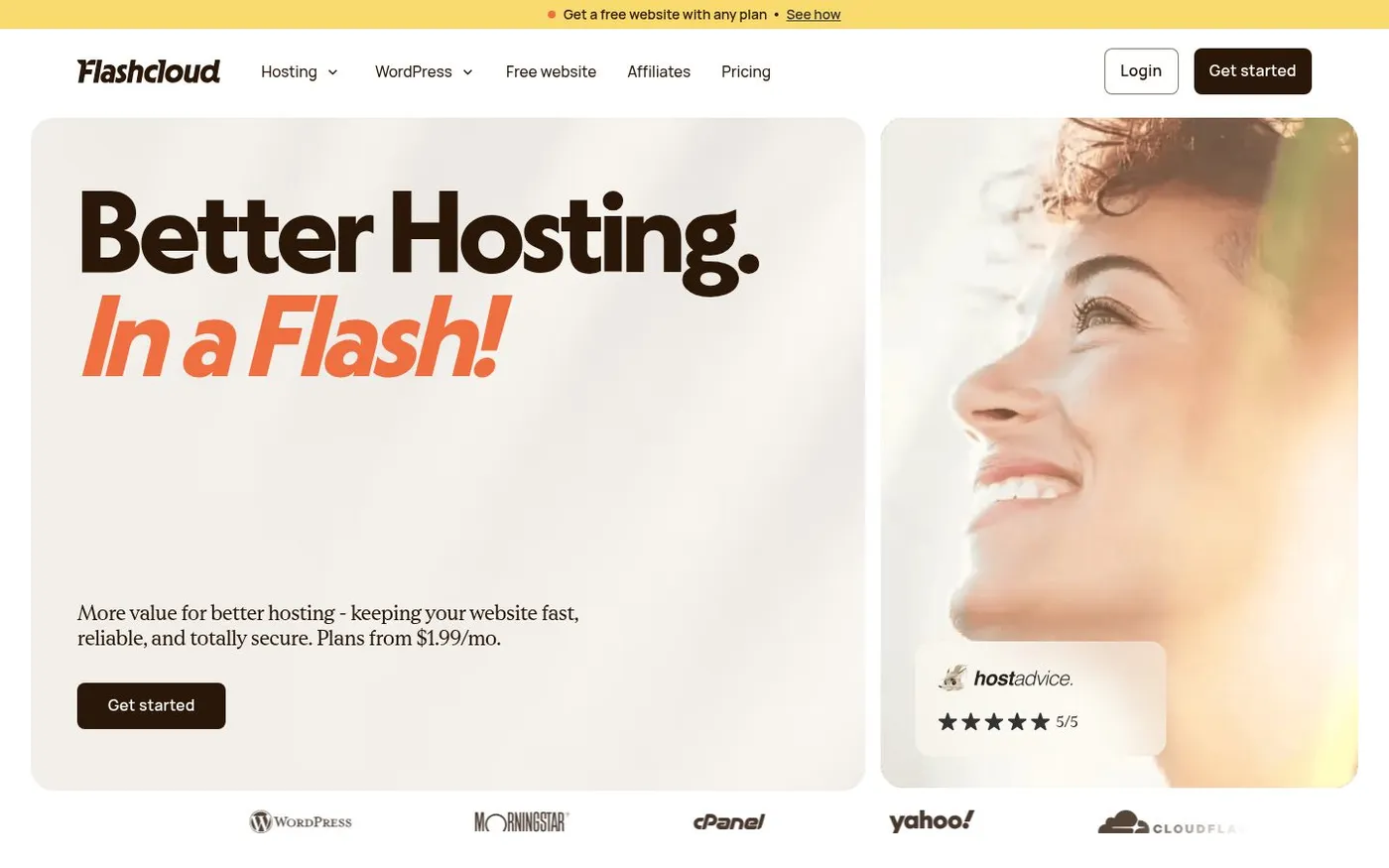
Flashcloud bundles the things other hosts charge extra for. You get a free domain for life, which means registration, renewal, and privacy for as long as you stay with us. That last point matters for authors on a pen name.
You also get a free hand-built starter website, so you're not staring at a blank screen. Migration is free, and on annual plans we'll match up to six months of unused time from your previous host with proof of the prior invoice. There's a money-back guarantee anytime during your initial term, and our renewal rate is published upfront and holds after the first rise.
The honest limitation: we're newer and smaller than the long-established names on this list. We've been building hosting for nearly 20 years, but the Flashcloud name itself hasn't been around as long as some. If a decades-old brand is what reassures you, that's fair.
The Flashcloud Start plan is $2.79/mo, renewing at $9.99/mo. You can see the full pricing and what's in each tier.
2. Namecheap - best for authors writing under a pen name
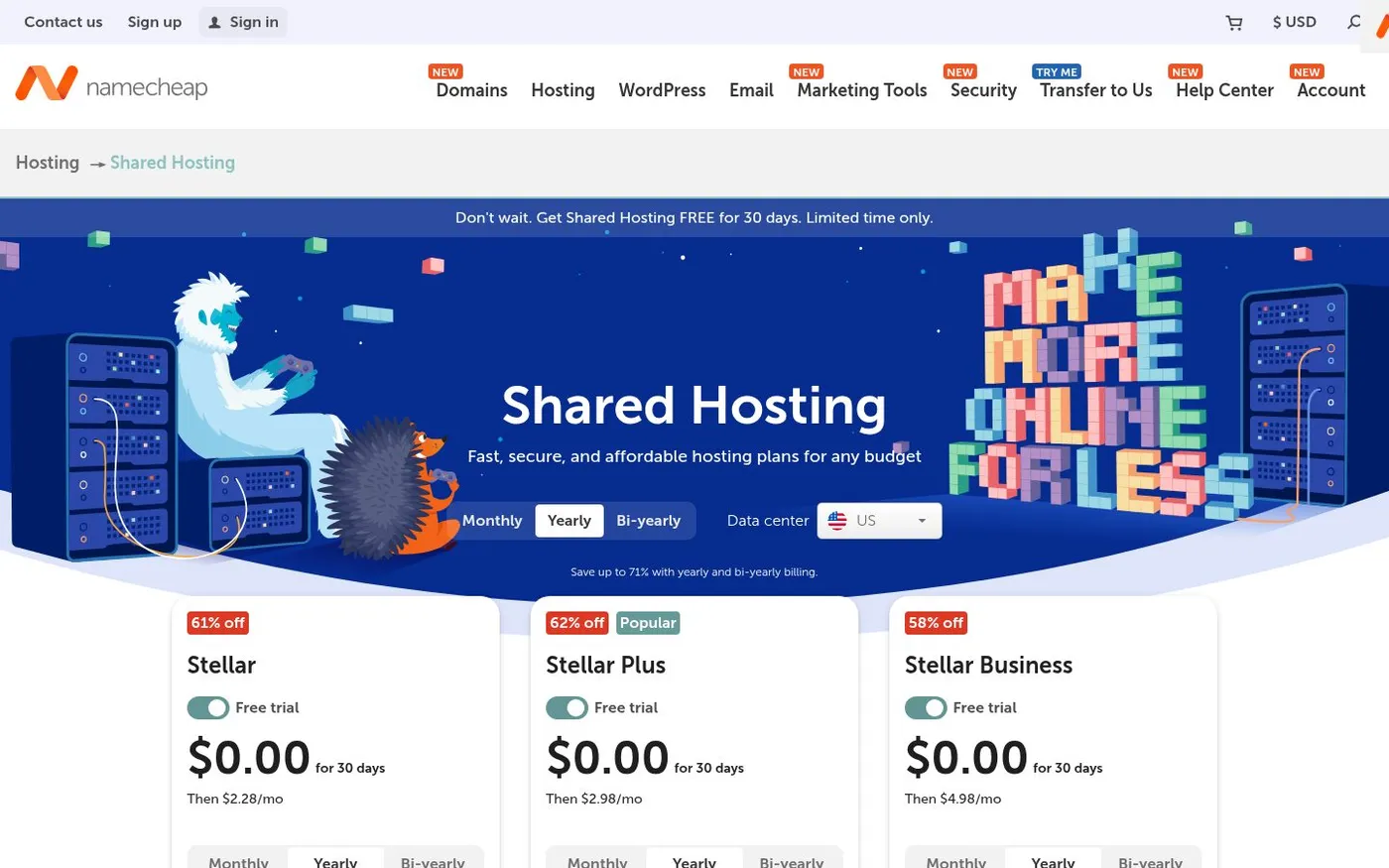
Namecheap includes free WHOIS privacy for life on every registration and transfer. If protecting a pen name is your priority, that's a strong fit. You also get a free domain for year one, a 30-day money-back guarantee, and free migration.
The honest limitation: the entry plan backs up twice a week rather than daily. That's the thinnest backup schedule among these picks. For an author adding pages slowly, it may be fine. For frequent updates, it's worth knowing.
Namecheap's entry plan is $2.28/mo, renewing at $5.88/mo.
3. DreamHost - best for a simple independent option
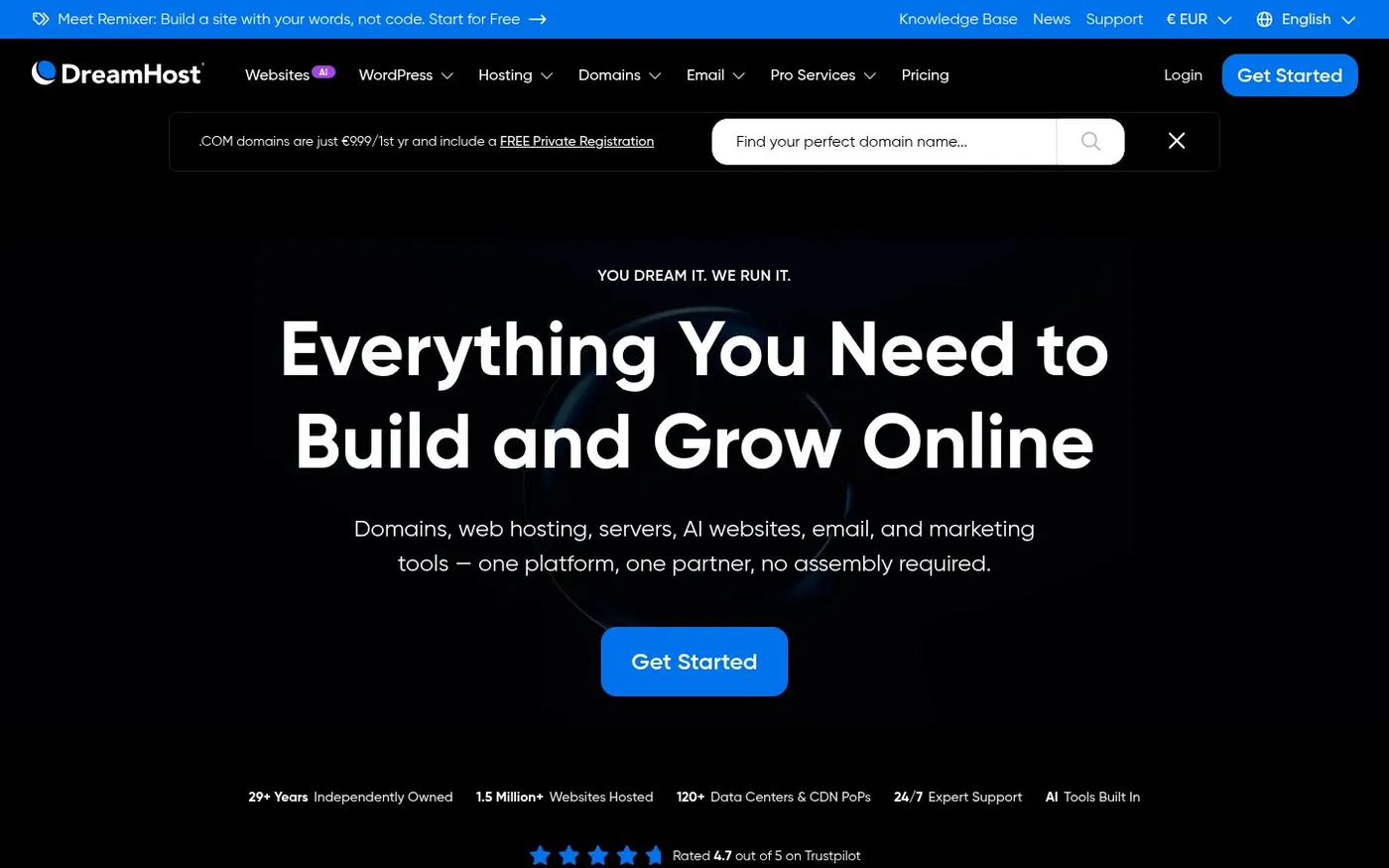
DreamHost is independently owned, which appeals if you'd rather not host with a giant conglomerate. It includes a team-built starter website, a free domain for year one, a 30-day money-back guarantee, and a free WordPress migration tool.
The honest limitation: DreamHost uses a custom control panel rather than the standard one. It's clean, but if you've used other hosts before, there's a small learning curve while you find your way around.
DreamHost's shared plan is $2.89/mo, renewing at $10.99/mo.
4. AccuWeb Hosting - best for a rate that doesn't jump
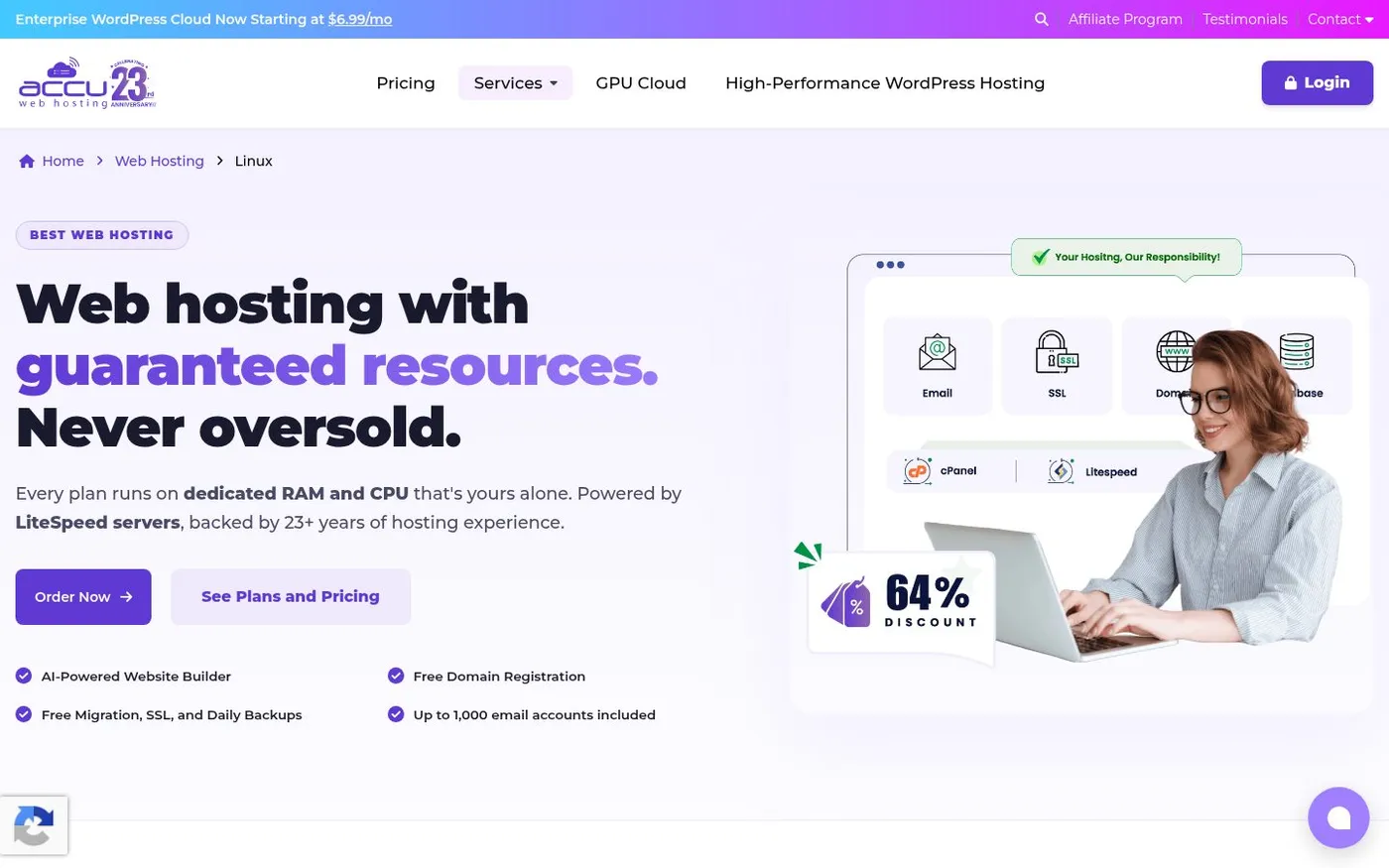
Most hosts raise the price at renewal. AccuWeb's entry plan doesn't. It renews at the same rate it started at, so there's no step-up at all. If a predictable bill matters to you, that's genuinely useful. They also publish a support target of around an 11-minute first response to a ticket.
The honest limitation: AccuWeb is the least known name here. Their backup and staging terms aren't published, so we can't tell you exactly what you get there. Ask them directly before you sign up.
AccuWeb's entry plan is $3.79/mo, and it renews at $3.79/mo.
5. InterServer - best if you don't want to commit to a long term
InterServer charges the same monthly rate at every term length. One month costs $2.50/mo, and so does a two-year plan. Renewal is $7.00/mo on every term too. So you don't need a long commitment to get the advertised rate. That suits an author who wants to try a site without locking in years.
They publish unlimited storage and transfer for normal website and email use, with the stated condition that the plan is for websites and email rather than backup storage, media libraries, or reselling.
The honest limitation: this is the thinnest plan on the list for inclusions. There's no free domain at all. A domain costs $7.99 to register and $15 to renew. Backups run weekly rather than daily, storage is SSD rather than NVMe, there's no LiteSpeed, the control panel is DirectAdmin rather than cPanel, and only one free website transfer is included.
InterServer is $2.50/mo, renewing at $7.00/mo.
How they compare
Host | Price (12-mo) | Free starter website | Free domain | Domain privacy | Migration | Money-back guarantee | Best for |
|---|---|---|---|---|---|---|---|
Flashcloud | $2.79/mo, renews $9.99 | Yes, hand-built | Yes, for life | Yes, for life | Free, plus up to 6 months matched | Anytime in initial term | Overall value and inclusions |
Namecheap | $2.28/mo, renews $5.88 | Not available | Yes, year one | Yes, for life | Free | 30 days | Authors on a pen name |
DreamHost | $2.89/mo, renews $10.99 | Yes, team-built | Yes, year one | Yes, for life | Free WordPress tool | 30 days | Simple independent option |
AccuWeb Hosting | $3.79/mo, renews $3.79 | Not available | Yes, year one | Paid | Free | 30 days | A rate that doesn't jump |
InterServer | $2.50/mo, renews $7.00 | Not available | No, $7.99 to register | Paid | One free transfer | Not available | No long-term commitment |
All prices are for a 12-month term.
Which one should you choose
- If you want the most included for your money, choose Flashcloud.
- If protecting a pen name is your top priority, choose Namecheap for its free WHOIS privacy for life.
- If you prefer an independent host with a starter site, choose DreamHost.
- If a rate that never jumps matters most, choose AccuWeb Hosting.
- If you want to try a site without committing to years, choose InterServer.
What to sort out before you launch
A few decisions now save you real headaches later. None of them take long.
Register the domain consistently
Decide whether the domain sits under your legal name or your pen name, and register it that way from the start. If you use a pen name, turn on domain privacy before the record goes live. Fixing a public WHOIS record after the fact is slower than getting it right the first time.
Know who holds the logins
If a friend or a hired designer sets up your site, make sure the accounts are in your name and you hold the master logins. Your hosting account, your domain, your email, your mailing list. All of it should be yours.
Authors change assistants and designers over the years. Your access shouldn't depend on staying in touch with someone from three books ago.
Keep the mailing list somewhere you control
Your list should live somewhere you own, not only inside a social platform's follower count. Followers are borrowed. Email addresses, collected through your own site, are yours to keep and export.
We won't push a particular tool. Pick one that lets you export your subscribers whenever you like. That's the test that matters.
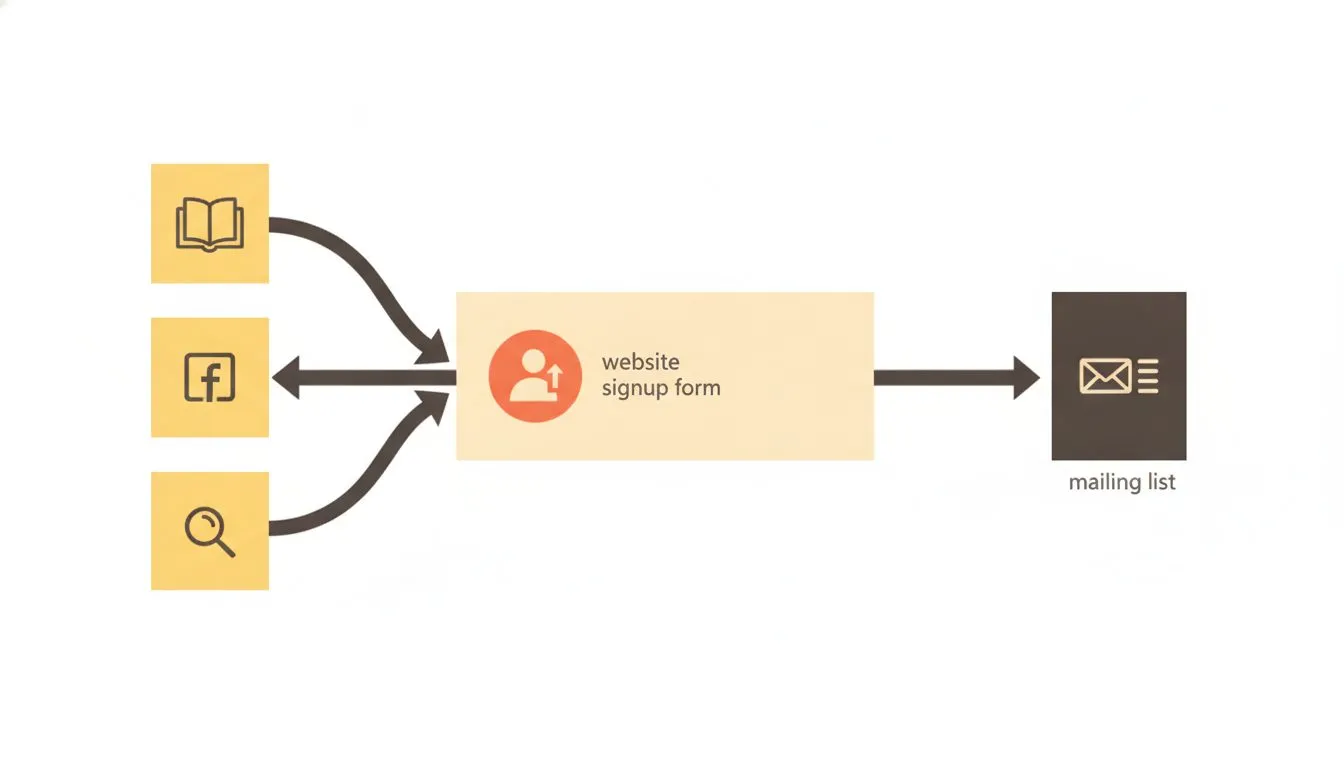
Every channel feeds one thing you own: your mailing list.
Why Flashcloud works for authors
Here's the factual case, without the sales pitch.
The free domain for life covers registration, renewal, and privacy for as long as you stay. For an author on a pen name, that privacy piece keeps your details out of public WHOIS at no extra cost, year after year. You don't renew it separately or watch it expire.
The free hand-built starter website means you get a real page to work from instead of a blank editor. If you'd rather build on WordPress, our hosting runs it smoothly, and one-click installs get you going fast. Our guide to WordPress themes can help you pick a look.
Switching from another host? Our free migration team handles the move. On annual plans, we'll match up to six months of unused time from your old host with proof of the prior invoice. The money-back guarantee runs anytime during your initial term, and the renewal rate is published upfront.
We're newer and smaller than some names here. We're comfortable saying so. If you want to know how we think about hosting, our post on why we started Flashcloud lays it out. When you need help, real people answer. You can always contact us with a question.
Conclusion
The right hosting fades into the background. It keeps your book pages fast, your signup form working, and your email professional. It protects your pen name if you have one. And it lets you focus on the actual work, which is writing.
Match the host to your priority. Value and inclusions point to Flashcloud. Pen-name privacy points to Namecheap. A rate that never moves points to AccuWeb. A short commitment points to InterServer. An independent option points to DreamHost. Whatever you choose, get your domain, your logins, and your mailing list in order first. Those are the things you own.
All prices in this article were drawn from each provider's own website in September 2026.

Neycho Tepavicharov is the co-founder of Flashcloud, with nearly two decades in web hosting behind him and a hosting company he co-founded and sold along the way. He started Flashcloud to make hosting clearer, more generous, and genuinely supportive, and he writes about hosting, performance, how AI is changing the industry, and the occasional strong opinion about where it gets things wrong.
Connect on LinkedIn