What an independent review found when it tested our hosting

Marketing claims are easy to make. Proof is harder. So when an independent reviewer offers to test your hosting, hands-on, the right answer is yes. In July 2026, CyberNews published a review of Flashcloud that included real performance testing. Here's exactly what they measured, what the numbers mean, and what they criticized.
We're not going to hide the critical parts. If you're evaluating us, you deserve the full picture, not a highlight reel.
Why independent reviews matter
Anyone can say their hosting is fast. A third-party test either backs that up or it doesn't. That's the value of an outside reviewer running their own tools on their own schedule.
What reviewers actually test.
Good reviewers measure the things that affect you day to day. Page load speed. How the site behaves under heavy traffic. Uptime over time. Support quality. Then they weigh all of it against the price.
CyberNews did all of the above. Some of the terms they use, like LCP and load testing, sound technical. We'll explain each one in plain language as we go.
Why we welcomed the scrutiny.
We build our hosting to perform. So independent testing works in our favor more often than not. It also keeps us honest about where we still have ground to cover.
If you want to run your own tests before committing to any host, we wrote a guide on how to actually test a web host. The methods below are the same ones you can use yourself.
The speed results
Speed is the first thing visitors notice, even if they never think about it consciously. A slow page feels broken. A fast one feels trustworthy.
How Flashcloud performed on load times.
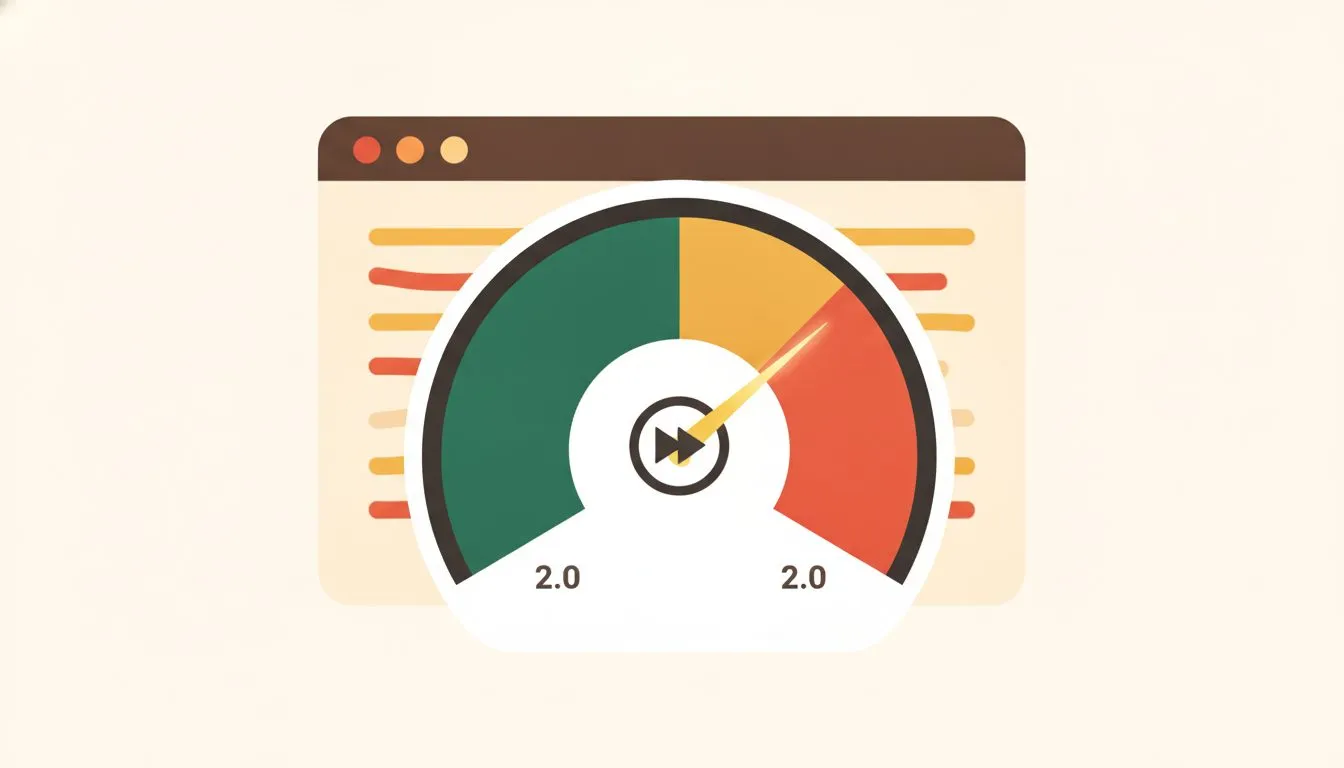
CyberNews tested page load speed using webpagetest.org, a well-known independent testing tool. The key number was a Largest Contentful Paint of 2.017 seconds.
LCP measures how long the largest element on a page, usually the main image or headline block, takes to appear. It's a good proxy for when a page feels "loaded" to a real person. Anything under 2.5 seconds is considered good. Flashcloud came in comfortably under that line.
What fast hosting actually means for you.
Faster sites hold onto visitors. People leave slow pages, often within a few seconds. Speed also feeds into search rankings, so a quicker site can earn more visibility for free.
For a store or a service business, that adds up. Fewer people bounce. More people reach your contact form or checkout. Speed isn't a vanity metric. It's revenue.
Reliability under load and over time
Being fast when the site is quiet is one thing. Staying fast and available when it's busy, and staying up for weeks on end, is the real test.
How Flashcloud held up when it got busy.
The reviewer ran a load test using Grafana Labs' k6 tool. They simulated 50 virtual users, which they estimated as roughly 5,000 real visitors hitting the site at the same time.
This matters because a lot of hosting is fine until it gets popular. A traffic spike, a product launch, a mention on social media, and a weak host buckles. In this test, Flashcloud showed no latency spikes and no connection issues under that load.
What the uptime monitoring showed.
CyberNews then monitored uptime continuously for two weeks. Not a snapshot. A sustained window. The results:
- 100% uptime across the two-week test period.
- 99.97% reachability from their monitoring servers.
- Average latency of 191.72ms, with test servers in New York and Ohio connecting in 40 to 70ms.
To be clear about what that 100% figure is: it's a measured result over a specific two weeks, not a promise. Our published uptime guarantee is 99.9%. The test simply showed us hitting the top of that range during the window they watched.
A host that stays up protects your reputation. Every minute your site is down is a customer who assumes you're closed, or worse, gone.
The overall verdict
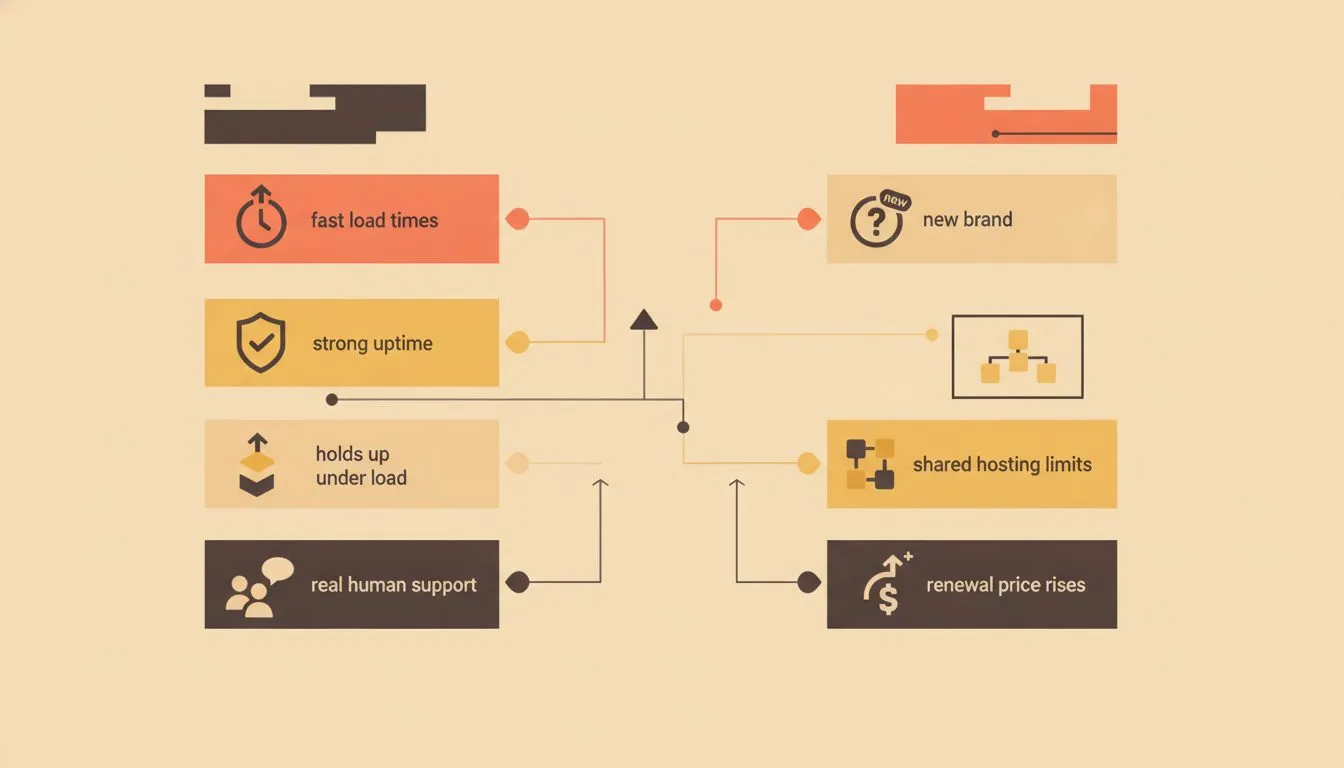
CyberNews gave Flashcloud an overall rating of 4.3 out of 5. That reflects strong performance, real human support, and value. You can read the full CyberNews review for their complete breakdown.
They also noted the benefits we include as standard rather than as paid add-ons, like a free starter website and free migration from your old host.
What the review criticized
A review that only praises isn't worth much. Here's what CyberNews flagged, stated plainly. We're not going to explain any of it away.
We're a new brand.
Flashcloud launched in early 2026. That means we have less of a public track record than hosts that have been around for a decade or more. That's a fair point. Trust is earned over time, and we're still early in that. The people behind Flashcloud have nearly 20 years in hosting, but the brand itself is young.
Shared hosting has limits.
The review noted that shared hosting restricts advanced root-level scripting configurations. That's true and it's normal for shared plans. If you need deep, low-level control over the server environment, shared hosting will feel limiting. For most small business and creator sites, it won't. But if that's you, it's worth knowing up front.
Prices rise at renewal.
Like most of the industry, our introductory rate is lower than the renewal rate. Prices go up when you renew. The review described our pricing as competitive and fair relative to the industry, but the increase is real.
What we can say is this: the renewal rate is published before you buy. You can see it on our pricing page when you sign up, and it doesn't change on you afterward. We think that's the least you should expect, not a special favor.
What this means for you
Independent scores are useful because they cut through the noise. But a number only helps if you know what sits behind it.
The evidence here is straightforward. Load times inside the "good" range. No wobble under simulated heavy traffic. Full uptime across a two-week watch. A 4.3 rating overall. Alongside honest limits: a young brand, the usual bounds of shared hosting, and renewal pricing in line with the rest of the market.
Choose your host on evidence, not promises. If you want help figuring out what "good value" actually looks like, we broke it down in this guide to best-value web hosting.
The review confirmed what we already believed. Flashcloud delivers. Now there's independent proof, criticisms and all.

The Flashcloud team shares hosting know-how, product news, and honest guidance to help you get the most from your website.
Connect on LinkedIn