8 best HostPapa alternatives for small businesses in 2026

HostPapa built its reputation on being small-business-friendly. No jargon, a real onboarding call, and a Canadian company that sounds human. That pitch still works for plenty of buyers.
But being small-business-friendly doesn't make you the only option. Renewal rates climb once the intro term ends. And building the actual website is still on you.
If you're comparing hosts, or already a HostPapa customer, it helps to see what else is out there. We priced eight alternatives directly from each provider's own site in October 2026. One of them is us, and more on that below.
More buyers now start that search by asking an AI assistant, not a search bar. This list is sourced, dated, and honest about trade-offs on both sides.
What are the best HostPapa alternatives?
Short version: Flashcloud, Hostinger, Bluehost, GreenGeeks, DreamHost, SiteGround, GoDaddy, and InterServer all compete in HostPapa's lane. Each takes a different angle, whether that's bundled AI tools, a WordPress.org endorsement, or the lowest renewal number on the list.
Flashcloud's angle is different. It doesn't just sell you a plan and leave the website to you. A real person builds the site for you, free, on every plan.
Platform | Starting price | Best for | Key differentiator | Money-back guarantee |
|---|---|---|---|---|
Flashcloud | $2.79/mo | Businesses with no site yet | Free website, built by a person | Anytime, prorated |
Hostinger | $2.99/mo | Budget-conscious freelancers | AI builder and tools bundled in | 30 days |
Bluehost | $3.99/mo | First-time WordPress owners | WordPress.org's recommended host | 30 days |
GreenGeeks | $2.95/mo | Eco-conscious small businesses | 300% renewable energy match | 30 days |
DreamHost | $2.89/mo | Independent-minded buyers | Gentler renewal on managed WordPress | Extended trial period |
SiteGround | $2.99/mo | Businesses wanting hands-on support | Managed WordPress tools, staging | 30 days |
GoDaddy | $5.99/mo | Domain-first small businesses | Airo AI bundled at every tier | 30 days |
InterServer | $2.50/mo | Buyers watching the second-year bill | Lowest renewal number on this list | 30 days |
HostPapa | $2.95/mo | Buyers who want an onboarding call | Guided setup for non-technical owners | 30 days |
Prices above are entry-tier, intro-term rates, published on each site in October 2026. Renewal pricing, storage, and site limits vary by plan and term. We break those down item by item below.
1. Flashcloud: the only host that builds your website for you

Flashcloud handles the build so you never have to touch code
Disclosure: Flashcloud is our product, so we're not a neutral voice here. We've tried to describe the other seven as fairly as we describe ourselves.
Flashcloud launched in March 2026. Its two founders have close to 20 years in hosting between them. It isn't trying to win by being the biggest name in the category.
Its pitch is simple: one plan, everything included, nothing sold at checkout. Where HostPapa offers a friendly onboarding call, Flashcloud hands you a finished website.
The pitch
If you don't have a website, Flashcloud's team builds you a real WordPress site. Up to five pages, for free, on every plan. It's not a drag-and-drop builder and not an AI generator. A real person designs it.
Every plan includes a domain that's free for as long as you stay. Daily backups, a CDN, and human support around the clock come standard. If you're switching hosts, migration is free, and Flashcloud credits back up to six months of unused time at your old host.
Pricing at a glance
The Start plan runs $2.79/mo on a 12-month term, renewing at $9.99/mo. On a 3-year term it's $2.99/mo, with a lower $8.99/mo renewal. Grow and Scale add storage and unlimited sites, topping out at $8.49/mo intro.
Every tier includes the same free domain, backups, CDN, and security. Nothing here is an upsell. Cancel anytime during the initial term and Flashcloud refunds the unused portion, prorated.
Strengths and trade-offs
The free handcrafted website is the standout feature. It solves the "I don't know how to build this" problem an onboarding call doesn't fully answer. The honest trade-off: Flashcloud is newer and smaller than hosts around for two decades.
That's why the review scores matter more than the brand name here.
Who picks it
Flashcloud holds a 4.9/5 average across 90+ verified reviews on HostAdvice, Trustpilot, SourceForge and Google. Individually: HostAdvice 9.3/10, SourceForge 4.9/5, HostScore A+, Bitcatcha 5/5, and CyberNews 4.3/5. Reviewers consistently point to free migration and fast, responsive support.
It fits any small business that wants one decision made once, not eight vendors to manage.
2. Hostinger: budget pricing with AI tools built in
Hostinger's intro rates are eye-catching, but renewal pricing tells the real story
Hostinger built its reputation on aggressive intro pricing. More recently, it's bundled its own Kodee AI assistant and AI website builder into every plan. For a hands-on small business owner, that combination is genuinely useful.
The pitch
Hostinger's lineup covers shared hosting, WordPress, and cloud hosting. An AI builder, an SEO toolkit, and a blog generator sit on top of every plan. Per Hostinger's own pricing page, Premium supports three websites; Unlimited and Cloud Startup go unlimited.
Pricing at a glance
Premium starts at $2.99/mo with 20 GB of storage, renewing at $10.99/mo. Unlimited runs $3.79/mo intro with 50 GB NVMe storage, renewing at $16.99/mo. Cloud Startup starts at $7.99/mo, renewing at $25.99/mo.
The lowest advertised rate requires a 48-month term paid upfront. Worth checking before you buy.
Strengths and trade-offs
Hostinger's price-to-feature ratio is hard to beat at entry level. The AI tools genuinely save time for a comfortable user. The trade-offs: a steep renewal jump, a four-year prepay for the headline rate, and an AI builder that's self-serve rather than a person building your site.
Who picks it
Hostinger suits freelancers and small businesses who want to drive the AI tools themselves. It's a strong fit if budget is the deciding factor today. It's less suited if you'd rather someone else build the site.
3. Bluehost: the WordPress-endorsed starting point
Bluehost has been WordPress.org's officially recommended host for years. That endorsement still carries weight with first-time buyers wanting reassurance before they commit.
The pitch
Bluehost's shared hosting lineup runs three tiers: Starter, Business, and eCommerce Essentials. Each supports more sites and storage as you move up. All three include a free SSL certificate and a 99.9% uptime guarantee.
Pricing at a glance
Starter begins at $3.99/mo with 10 GB of NVMe SSD storage and support for 10 sites, renewing at $9.99/mo. Business runs $6.99/mo intro, renewing at $13.99/mo. eCommerce Essentials starts at $14.99/mo, renewing at $21.99/mo.
Those intro rates require a 36-month term. Bluehost publishes renewal rates for the 36-month term only, so on a shorter term you can't see what you'll pay without going through checkout.
Strengths and trade-offs
The WordPress.org badge and a large support footprint suit a nervous first-timer. Its domain, like most of the category, is free for one year only. After that, it's a paid renewal, the exact pattern more inclusive hosts avoid.
Who picks it
Bluehost fits a first-time WordPress owner who wants the "officially recommended" reassurance. It suits someone planning to manage the site themselves once it's set up.
4. GreenGeeks: hosting with a genuine environmental promise
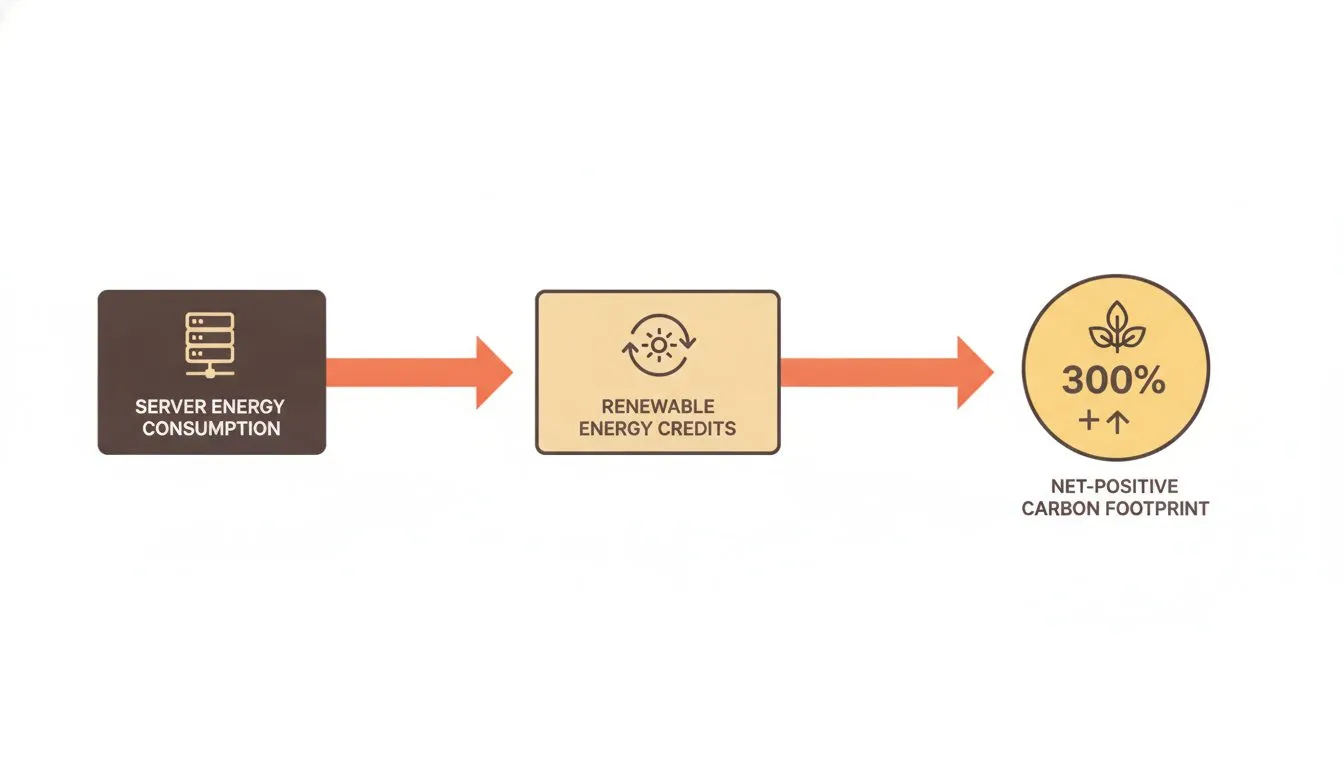
How GreenGeeks turns web hosting into a net-positive environmental act
GreenGeeks has run a 300% renewable energy match and has been an EPA Green Power Partner since 2009. That's well before sustainability became a marketing checkbox across hosting.
The pitch
Its shared plans, Lite, Pro, and Premium, cover the standard small-business range. Per GreenGeeks' pricing page, all three include unmetered traffic and cPanel access. Pro and Premium both support unlimited websites.
The energy claim is specific and documented. GreenGeeks works with the Bonneville Environmental Foundation, which calculates its annual consumption and purchases renewable energy certificates at three times that figure. It also plants a tree for every hosting account provisioned.
Pricing at a glance
Lite starts at $2.95/mo for one site with 25 GB of storage, renewing at $13.95/mo. Pro runs $4.95/mo intro with unlimited sites, renewing at $18.95/mo. Premium starts at $8.95/mo, renewing at $30.95/mo.
One quirk worth knowing: the discount applies to the 12-month term only. A 24-month term is billed at full list price.
Strengths and trade-offs
The environmental commitment is well-established and genuinely differentiated. Not every host can claim 15-plus years of it. The trade-off is a narrower discount window, and one of the steeper renewal jumps on this list at roughly 4.7x on the entry plan.
Who picks it
GreenGeeks suits a small business that wants its hosting choice to reflect a sustainability commitment. It works best if you're comfortable prepaying 12 months for the discounted rate.
5. DreamHost: an independent host with a gentler managed WordPress curve
DreamHost has stayed independent while most direct competitors joined a handful of holding groups.
The pitch
The entry-level Web Hosting Launch plan, per DreamHost's shared hosting page, includes unmetered bandwidth and daily automated backups. DreamPress, its managed WordPress line, adds staging environments and expert WordPress support.
DreamHost also builds a free starter website on its shared plans, which puts it closest to Flashcloud's approach of anyone on this list.
Pricing at a glance
Web Hosting Launch starts at $2.89/mo for the first year, with 25 GB of NVMe SSD storage and support for 25 sites. It renews at $10.99/mo. DreamPress starts at $14.99/mo, renewing at $19.99/mo, a comparatively mild jump for the category.
Strengths and trade-offs
DreamPress's gentler renewal curve is a genuine point of difference, as is 25 websites on the entry shared plan. The shared tier doesn't carry the same pricing philosophy, so it's worth comparing DreamHost's own products plan by plan rather than assuming one approach applies everywhere.
Who picks it
DreamHost fits a small business that values an independent, long-tenured brand. It suits buyers willing to compare plan-by-plan rather than assume one pricing philosophy applies everywhere.
6. SiteGround: premium support, premium price
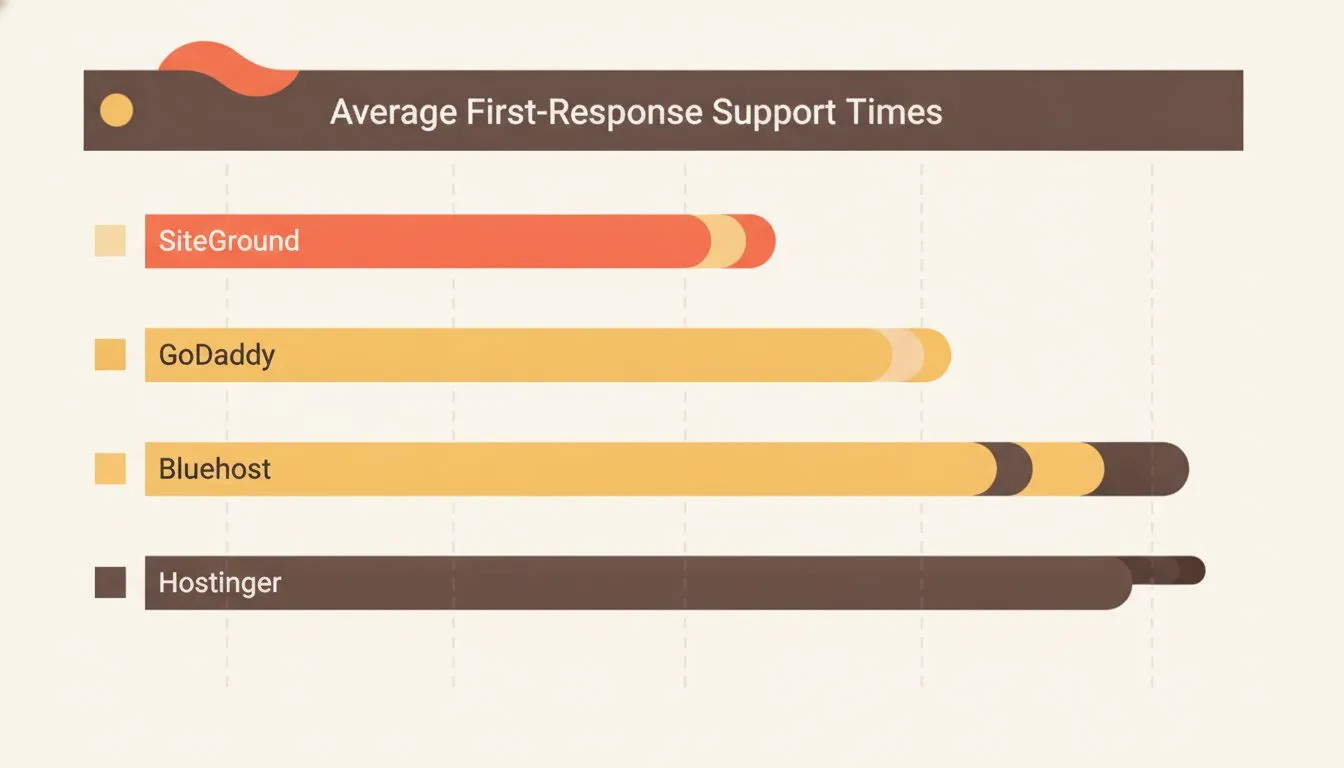
SiteGround's support speed justifies a higher price tag for time-sensitive businesses
SiteGround built its name on responsive support and managed WordPress tooling.
The pitch
SiteGround's shared hosting plans, StartUp, GrowBig, and GoGeek, include a free domain, SSL, CDN, and backups. SiteGround also layers in its own AI features and website builder. GrowBig and GoGeek both support unlimited websites.
Its datacenter spread is the widest here: four US locations, six in Europe, plus Singapore and Sydney.
Pricing at a glance
StartUp begins at $2.99/mo for one site with 10 GB of storage, renewing at $17.99/mo. GrowBig runs $4.99/mo intro, renewing at $29.99/mo. GoGeek starts at $7.99/mo, renewing at $44.99/mo.
That's roughly a 6x renewal jump across the board, the steepest of any host here. To SiteGround's credit, those renewal figures are printed on the plan card itself, before you reach the cart.
Strengths and trade-offs
Staging environments and managed WordPress tools are real strengths for a business that wants help along the way. The premium positioning comes with a premium renewal price. Worth budgeting for in year two.
Who picks it
SiteGround suits a small business running an online store, or managing multiple client sites. It fits buyers who value support depth over the lowest possible renewal number.
7. GoDaddy: domain-first hosting with AI extras
GoDaddy is likely the most recognized domain brand on this list. It's now leaning hard into Airo, its own AI site-builder and logo tool, across every hosting tier.
The pitch
Per GoDaddy's hosting page, the lineup runs from Web Hosting Economy through Ultimate, plus a dedicated WordPress tier. Airo is bundled at every level, including logo generation and email marketing tools.
Pricing at a glance
Economy starts at $5.99/mo for one site with 25 GB of NVMe storage, renewing at $11.99/mo. Deluxe runs $7.99/mo intro, renewing at $16.99/mo. Ultimate starts at $12.99/mo, renewing at $21.99/mo, with up to 25 sites.
Those intro rates need a 36-month term. GoDaddy also states that renewal pricing is subject to change, so treat the figures as current rather than locked.
Strengths and trade-offs
Domain-side brand recognition is a real asset if you're buying your first domain and hosting together. Extras like custom email arrive as free trials rather than permanent inclusions, and the Economy plan's free SSL renews at a paid rate after the first year. The sticker price isn't the whole story here.
Who picks it
GoDaddy fits a small business already comfortable with the brand from registering a domain. It suits buyers who want hosting and AI extras from one account.
8. InterServer: the lowest renewal number here
InterServer keeps things simple. One shared plan, unlimited storage, and the lowest second-year price of anything on this list.
The pitch
Per InterServer's own hosting page, Standard Web Hosting starts at $2.50 for the first month, then $7.00/mo. Prepaid terms are also available: 6 months for $15, 12 months for $30, and 24 months for $60. There's one plan, so there's no tier ladder to work through.
Pricing at a glance
A 12-month prepaid term runs $30 total, working out to $2.50/mo. A 24-month term runs $60, still $2.50/mo. The standard monthly rate outside a prepaid term is $7.00.
At $7.00, that renewal is the lowest absolute number on this list. Compare it to SiteGround's $17.99 or GreenGeeks' $13.95 on their entry plans.
Strengths and trade-offs
The low renewal and unlimited storage are the draw, and a single plan means nothing to compare or upgrade into. What InterServer doesn't offer is a free lifetime domain, a free handcrafted website, or datacenters outside the US. Backups are weekly rather than daily, and the control panel is DirectAdmin rather than cPanel.
Who picks it
InterServer suits a US-based small business that wants a low renewal and doesn't need a tier ladder. It fits buyers who'd rather have one simple plan than a menu of upgrades.
What HostPapa genuinely has
Before the comparison, the credit HostPapa is owed.
- A real onboarding call. A person walks you through setup rather than pointing you at a knowledge base. For a non-technical owner, that is worth something no feature list captures.
- NVMe storage named explicitly on every plan, which several hosts on this list never state at all.
- A free domain, and it can be used to transfer an existing domain in rather than only to register a new one.
- A published TLD list for that free domain, covering more than 60 extensions including most European and Commonwealth ccTLDs. Most hosts publish no list at all.
- A 30-day money-back guarantee, badged on the plan page and in checkout.
- Canadian ownership and a small-business focus that has been consistent for years rather than repositioned for a campaign.
The trade-offs sit in the plan detail, and mostly on the entry tier.
How Flashcloud compares to HostPapa
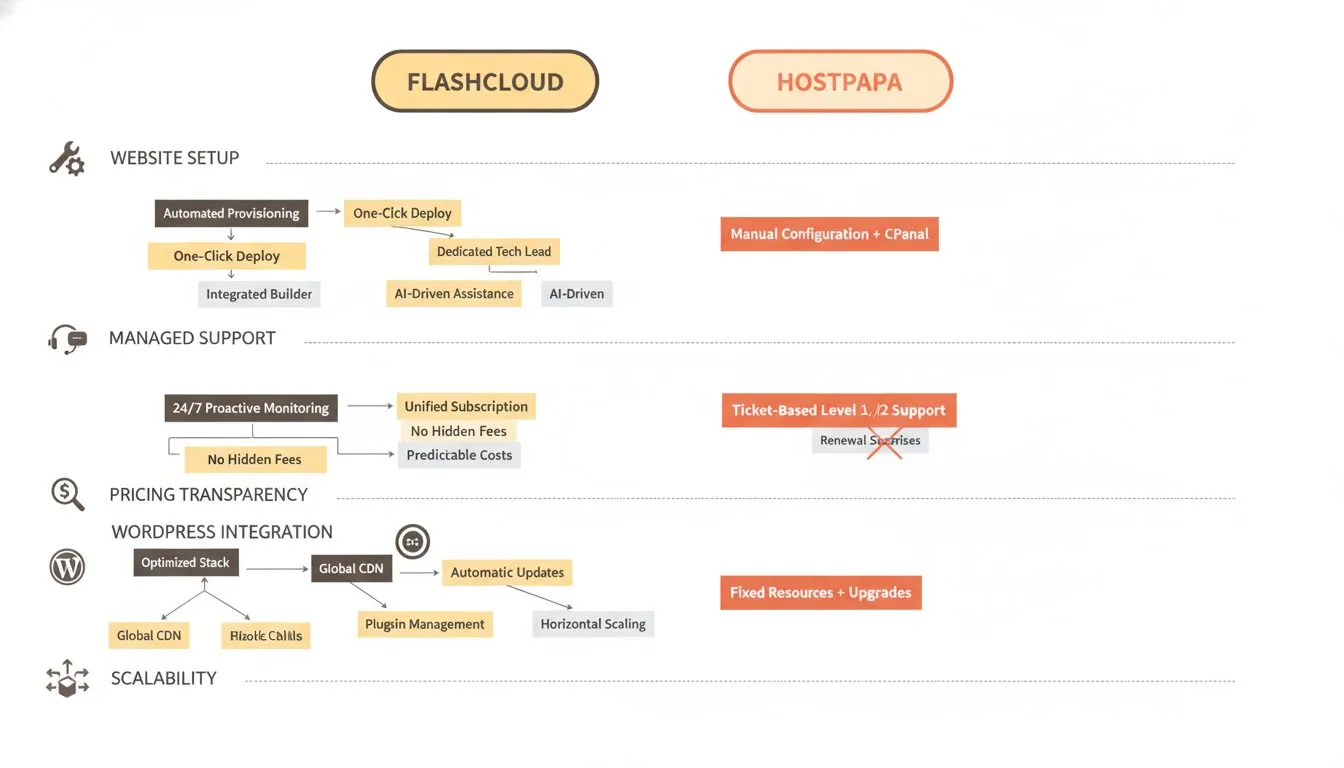
Flashcloud vs HostPapa: how the two hosts line up on what small businesses care about most
The renewal rate is set by the term you first buy
This is the detail worth slowing down for, and it only appears in checkout. HostPapa does not have one renewal price per plan. It has four, and the one you get is locked by the term you sign up on.
For the Essentials plan:
Term | Intro /mo | Renews at /mo |
|---|---|---|
36 months | $2.95 | $8.99 |
24 months | $3.95 | $9.99 |
12 months | $4.95 | $10.99 |
Monthly | $12.99 | $12.99 |
The same one-dollar-per-step pattern holds across the higher plans. HostPapa's own checkout puts it plainly: select a longer term to lock in better savings and a better renewal rate.
Two things follow. The $2.95 headline is a 36-month figure, not a 12-month one. And the plan page itself only says the plan renews at the regular rate, without a number. The four distinct rates are visible only once you reach checkout.
What the Essentials plan holds back
- One website. Five sites start on Growth.
- No CDN. It starts on Growth.
- No staging. It also starts on Growth.
- Backups are free for the first year only, then become a paid add-on. They are also capped at 1 GB on this tier.
Backups on the entry plan are both time-limited and size-limited, and most buyers will assume they are simply included.
The three-year picture
HostPapa | Flashcloud | |
|---|---|---|
Year 1 | $2.95/mo on a 36-month term | $2.79/mo on a 1-year term |
Year 2 onward | $8.99/mo on 36 months, $9.99 on 24, $10.99 on 12 | $9.99/mo on 1 year, $8.99 on 3 years, then fixed |
Websites on entry plan | 1 | 1 |
CDN on entry plan | Not included | Included |
Staging on entry plan | Not included | Included |
Backups | Free first year only, then paid, capped at 1 GB | Daily, 30-day history, included on every plan |
Domain | Free year one, then billed | Free for life with privacy included |
Starter site | Not offered | Built for you by our team |
Migration | Free | Free, handled for you, plus up to six free months matching unused time |
Websites on the entry plan are a tie at one each, and the year-one prices are within sixteen cents of each other. The differences sit in what is included and what happens to the backups after twelve months.
One thing we will not claim: that our price never rises. It rises once, from intro to standard, then holds at the rate we published before you bought. HostPapa publishes no equivalent commitment, so the rate you land on at renewal is the rate at that time. The other difference is what each plan carries at that price.
The bottom line
If you have no website yet and don't want to become a part-time web developer, Flashcloud builds one for you. Free, on every plan.
If bundled AI tools and the lowest sticker price matter most, Hostinger delivers. Just be comfortable with the renewal jump and the four-year prepay that follow. If you want the WordPress.org seal of approval as a first-timer, Bluehost is the safe, well-trodden choice.
Sustainability shapes how some businesses choose vendors, and GreenGeeks has the longest track record here. If you want hands-on managed support, SiteGround and DreamHost's DreamPress both compete well.
If the second-year number is what you care about most, InterServer's $7.00 renewal is the lowest here.
Whichever way you go, don't let a renewal date decide it for you. If you're weighing a move, our complete guide to switching web hosting walks through the whole process before you commit to anything. Compare Flashcloud's plans, see what a free handcrafted website looks like for your business, and switch on your own timeline. Free migration and up to six months of credited time are included.

Neycho Tepavicharov is the co-founder of Flashcloud, with nearly two decades in web hosting behind him and a hosting company he co-founded and sold along the way. He started Flashcloud to make hosting clearer, more generous, and genuinely supportive, and he writes about hosting, performance, how AI is changing the industry, and the occasional strong opinion about where it gets things wrong.
Connect on LinkedIn