What to do when someone else owns the domain you want
You typed the name into the search box, hit enter, and there it was: taken. The one that fit your business perfectly. Before you scroll down the list of clunky alternatives and settle for something worse, stop. A registered domain is not always a dead end.
Many taken domains are for sale at some price, and there's a defined process for approaching an owner who hasn't listed one. But that process costs money before you know if it'll work. Both major brokers charge around $99 upfront plus 20% commission, and the upfront fee is non-refundable whether the owner agrees to sell or not. Know that before you start.
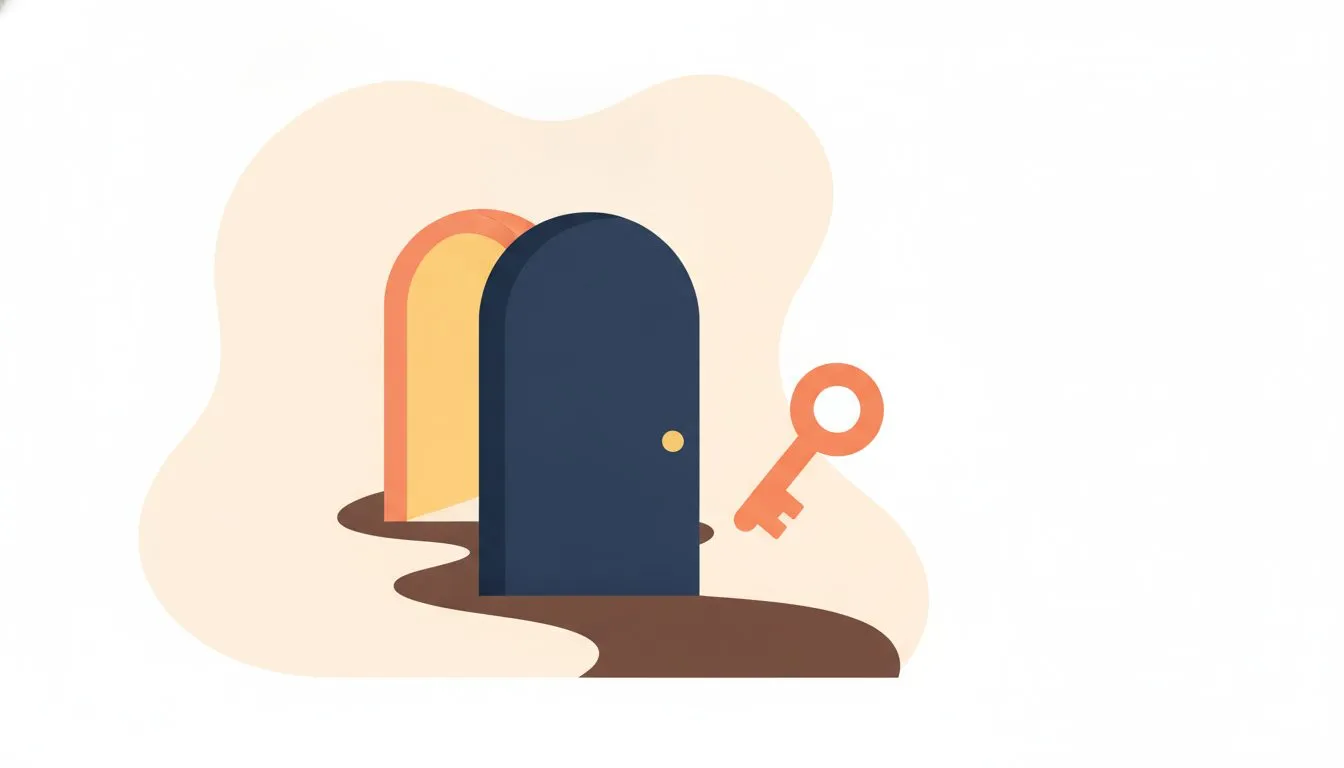
A taken domain is rarely as closed as it looks
First, work out what kind of taken it is
"Taken" covers four very different situations. Each one calls for a different response, so figure out which one you're looking at before you do anything.
- A live business is actually using it. There's a real website, real products, a real company behind it. This is usually the end of the road. A working business almost never sells the domain its customers use to find it, and no reasonable offer will change that. Be honest with yourself and move on.
- A parked page or ads. You land on a generic page with sponsored links, or a "this domain may be for sale" message. Someone holds it as an asset. This is the case where buying is most realistic.
- An abandoned site nobody has touched in years. There's content, but it's stale, dated, clearly forgotten. Check when it expires. You may not need to buy it at all.
- Nothing resolves. The name is registered but points nowhere. Someone owns it and isn't using it. Worth a closer look.
To tell them apart, do two things. Visit the domain in your browser to see what's there. Then run a WHOIS lookup to see who registered it and, crucially, when it expires. A WHOIS search shows the registrar, the registration and expiry dates, and sometimes the owner's contact details, unless they've used a privacy service to mask them. Our guide to WHOIS privacy explains why so many records are hidden these days.
Check the expiry date before you do anything else
This is the step people skip, and it's the one that can save you the most. If the domain expires soon, waiting might be free.
When a domain expires, it doesn't vanish overnight. It moves through a grace period, then a redemption period, before it finally drops and becomes available to register again. That whole cycle takes weeks, sometimes months. We walk through every stage in our piece on the domain lifecycle from registration to deletion.
Here's the honest part. Waiting works occasionally, not usually. Most owners renew, even for domains they aren't actively using, because renewal is inexpensive. And valuable names rarely make it to the open market: they're caught the moment they drop by services set up to grab them. So check the expiry, but don't build your launch plan around a domain you're hoping someone forgets to renew. If you want the mechanics, our note on what happens if you forget to renew a domain covers it from the owner's side.

Nobody hands over money or a domain directly
What it costs to buy a domain from its owner
If the domain isn't going to expire and someone's holding it as an asset, buying it is a legitimate option. There are two routes, and which one applies depends on whether the domain is already listed for sale.
If it's listed on a marketplace
Some owners publish their domains on a marketplace with a price or an option to make an offer. On these, you often pay little or nothing on top of the price itself.
- Sedo lists domains as buy-it-now, auction, or make-offer. The seller pays the commission, so if you pay by wire transfer, you pay nothing extra. A 3% express processing fee applies if you pay by card, PayPal, Klarna, or similar. Sedo holds your payment in its own neutral account until the transfer completes.
- Afternic publishes almost nothing about the buyer side on its own site. Its buying flow runs through GoDaddy.
- Dan.com no longer exists as a separate service. It now redirects to Afternic, which sits inside GoDaddy Aftermarket.
If it's not listed, which is the more common case
Most domains you want won't have a price tag on them. Someone owns it, but they haven't put it up for sale. This is where a broker comes in. A broker approaches the owner for you and, importantly, keeps you anonymous. That matters. A named buyer, especially one with an obvious business behind the name, can push the asking price up. Staying anonymous keeps the negotiation neutral.
Service | Upfront fee | Commission | Refundable if no sale |
|---|---|---|---|
Sedo buyer brokerage | $99 one-off contracting fee | 20% of purchase price | ✗ |
GoDaddy Domain Broker Service | $99.99 per domain | 20%, $15 minimum | ✗ |
A few details worth knowing before you commit:
- The upfront fee is non-refundable if the owner refuses to sell. Say that back to yourself. You can pay $99, have the broker reach out, and get a flat no, and you don't get the fee back. That's the fact most people don't see coming.
- Sedo declines applications it judges unlikely to succeed, so you aren't charged for those. That's a small mercy.
- GoDaddy commits a broker for up to 30 days, with offers to the seller valid for up to 10 business days.
- GoDaddy's commission is added to the purchase price and paid by you, the buyer. Their own disclaimer makes that clear.
- GoDaddy's service only works on domains that are currently registered. And if the domain sits at another registrar, you'll also pay to transfer it into your account once you own it.
How the money actually changes hands
You don't wire money to a stranger and hope a domain shows up. That's what escrow is for, and it's why buying a domain from an individual is safer than it sounds.
With escrow, you pay the escrow service, not the seller. The service holds your funds while the domain is transferred. Only once the transfer is confirmed does the seller get paid. Escrow.com verifies this by checking that WHOIS shows you as the new registrant before releasing the money.
Here's what it costs on Escrow.com for a domain under $5,000:
- The fee is 2.6% with a $50 minimum.
- Paying by card or PayPal adds 3.05%.
- Their own worked example: a $1,000 domain costs $50 by wire, or $80.50 by card.
Who pays the escrow fee isn't published anywhere on their site. It's settled between you and the seller as part of the deal, so agree on it before you shake hands.
What is it actually worth
You'll want a number here. There isn't one, and anyone who gives you a confident average is guessing.
None of the marketplaces publishes a typical or average sale price on its own site. Sedo puts out a live feed of recent bids, and Escrow.com publishes quarterly reports, but there's no headline figure you can anchor to. Domain values swing enormously based on length, keywords, extension, and how badly the current owner wants to keep it.
So do the one thing that's actually in your control. Decide what the name is worth to you before you make an offer, not after the owner names a number. Set a ceiling. Write it down. Then stick to it, because negotiation has a way of nudging your ceiling upward once you're emotionally invested in a name.
When to walk away
This is the section that saves you money. Walk away when:
- A live business is using the name. It's not for sale at any price you'd want to pay. Stop trying.
- The asking price is more than the name is worth to you. Your ceiling exists for a reason. Respect it.
- A good variation is available right now. A slightly different name you can register today is often the smarter move.
Here's the truth worth tattooing somewhere. A strong name you own outright beats a perfect name you can't afford. Plenty of great businesses run on their second-choice domain and nobody notices. Our guide to choosing a domain name that works for your business walks through how to find a variation that reads well, ranks, and feels like yours. Adding a word, abbreviating, or trying a different extension often opens up options you'd have missed. If you're curious which extensions are on the table, we keep a list of the TLDs we support.
If someone has registered a domain matching your business name
This one needs care, because two very different situations look the same at first.
The first: someone happens to have a similar or identical name to yours, and they registered their domain in good faith for their own reasons. This is common. Lots of businesses share names across different industries and regions. There's nothing to act on here. It's just the world being crowded.
The second: someone registered the domain specifically to sell it to you at a premium, or to mislead your customers. That may be a legal matter rather than a negotiation.
We're a hosting company, not a law firm, and we're not qualified to advise on trademark issues. If you believe you're in the second situation, speak to a lawyer who handles domain disputes. That's the right move, and it's the only one we'll recommend here.
A short note on Flashcloud
If you end up registering a fresh name instead, we can help with that. We register domains and include one free for life with hosting, which covers registration, renewal, and privacy for as long as you stay with us. And if you do buy a domain elsewhere, you can point it straight at hosting here without a hitch. Our domains knowledgebase covers the setup either way.
All fees were read from Sedo, Afternic, GoDaddy and Escrow.com's own websites on 12 September 2026.

Neycho Tepavicharov is the co-founder of Flashcloud, with nearly two decades in web hosting behind him and a hosting company he co-founded and sold along the way. He started Flashcloud to make hosting clearer, more generous, and genuinely supportive, and he writes about hosting, performance, how AI is changing the industry, and the occasional strong opinion about where it gets things wrong.
Connect on LinkedIn