How to choose a domain name that works for your business
Follow these practical steps to register a web address that builds credibility, stays easy to spell, and saves you from a painful domain switch later.
Learning how to choose a domain name is one of the first real decisions you'll make when building your business online. Get it right, and you set yourself up with a name that's easy to remember, easy to share, and easy to grow into. Get it wrong, and you'll fight small headaches for years. It's also harder than it used to be: there were 411.6 million registered domains at the end of September 2026, 169.8 million of them .com. This guide walks you through the whole process, from first idea to final registration.
We've spent nearly two decades helping people get online. So we've seen the good picks, the regrettable ones, and everything in between. Let's help you land in the good column.
Why choosing the right domain name matters
Your domain name is more than an address. It's a piece of your brand that shows up everywhere: business cards, email signatures, search results, and word of mouth. Small choices here have big effects later.
Your domain is your first impression
Before anyone reads a word on your site, they read your URL. A clean, professional domain says you're serious. A clumsy one plants doubt.
People judge credibility in seconds. A trustworthy domain earns clicks and keeps them. That first impression sets the tone for everything that follows.
A bad domain name is hard to undo
Switching domains later is painful. You lose search rankings, break old links, and confuse the people who already know you.
You'll also need to update email, redirects, and marketing everywhere. It's doable, but it's work you'd rather avoid. Choosing well the first time saves you all of it.
Domain names affect search and discoverability
A memorable domain helps people find you again, type you in directly and recommend you. That's where its real search value comes from.
What it doesn't do is rank you on its own. Google's SEO starter guide says the keywords in a domain name have hardly any effect beyond appearing in breadcrumbs, and that the extension only matters if you're targeting a specific country. So pick a name people remember, and let your content and fast, reliable web hosting do the ranking work.

Your domain points people straight to your brand.
The basics of picking a domain name
Some rules never change. Whether you're launching your first site or your tenth, these fundamentals keep you out of trouble. Master them before you get creative.
Keep it short and easy to spell
Short names win. They're easier to type, easier to remember, and harder to get wrong.
Aim for something you could say once and have someone type correctly. If a name needs spelling out letter by letter, it's too complicated. Simple beats clever nearly every time.
Avoid hyphens, numbers, and special characters
Hyphens and numbers cause confusion. Is it "5" or "five"? One hyphen or two? People guess wrong and land somewhere else.
These extras also weaken brand recall. Keep your domain to clean letters wherever you can. It reads better and shares better.
Make it easy to say out loud
Say your domain out loud before you commit. If it trips your tongue, it'll trip everyone else's.
Word of mouth is powerful and free. A name that's easy to speak is a name that spreads. If people can't say it, they can't recommend it.
Brandable or descriptive?
Most good names fall into one of two camps. Descriptive names say what you do, like a city plus a trade. They're clear from day one, but they can box you in and are often taken. Brandable names are invented or unexpected words. They're easier to find free and easier to own as a brand, but you have to teach people what they mean.
Either can work. Just avoid stuffing keywords into a name to chase rankings. It looks spammy and, as above, it doesn't help.
Picking the right domain extension for your goals
The extension is the part after the dot, like .com or .co. It matters more than most people think. Here's how to choose the one that fits your goals.
When .com is still the strongest choice
For most businesses, .com is still king. It's the default people assume and type without thinking.
That familiarity builds instant trust. If a .com version of your name is available, grab it. It's the safest, most recognized choice you can make.
Country and niche extensions that actually work
Some alternatives earn their place. A country code like .us signals you serve customers in the United States, which can build local trust. Some country codes come with rules: .us is limited to US citizens, residents and organizations with a real US presence.
Niche extensions can work too. Here's a quick guide to the popular ones:
Extension | Best for | What it signals |
|---|---|---|
.com | Almost any business | An established, general business people recognize by default |
.org | Nonprofits and communities | A mission or organization rather than a store |
.net | Tech and network services | A technical or infrastructure focus |
.co | Modern brands | A newer company, often when .com is taken |
.ai | AI and tech products | A tech brand. Google treats it as generic, but it needs a two-year minimum registration and costs more to renew |
.io | Software and startups | A developer or startup focus. Google treats it as generic |
.biz | General use | A business site, though less familiar to most people |
Not sure which extensions you can register? Check which TLDs we support before you settle on one.
New extensions worth considering and ones to skip
Newer extensions like .store, .app, or .tech can fit specific brands well. They make sense when they describe exactly what you do.
But skip anything that feels gimmicky or hard to remember. If an extension makes people pause or doubt your legitimacy, it's not worth the saving. When in doubt, go classic.
What about .ai and .io?
Both are country codes (Anguilla and the British Indian Ocean Territory) that Google treats as generic, which is why tech companies like them. .ai passed 1 million registrations in early 2026, and its registry raised prices and requires at least two years per registration. .io is still fully available, despite headlines about the Chagos Islands handover. Both are fine choices, but if your whole brand sits on one, register the .com too if you can.
And don't wait for a new extension. ICANN's 2026 round drew 1,615 applications, and evaluation runs into 2027, so pick from what's available today.
Check the renewal price, not just the first year
The registry that runs each extension sets its wholesale price. So an extension costs broadly the same wherever you buy it.
For common extensions like .com, .org, and .net, the renewal price is stable and close to the registration price. You can budget for them without surprises.
Some newer and niche extensions carry permanently higher renewals. The first year can look inexpensive while the renewal is several times higher. So check the renewal price before you commit, not the first-year price. Our guide to what a domain really costs to keep compares renewals at the big registrars.
How your domain name connects to your brand
Your domain and your brand should feel like one thing. When they line up, everything looks intentional. When they don't, you look scattered.
Match your domain to your business name closely
Your domain should match your business name as closely as possible. That consistency builds instant recognition.
If someone knows your business name, they should be able to guess your domain. No mental gymnastics required. The closer the match, the stronger the trust.
Think about where your business is heading
Choose a domain you won't outgrow. A name tied too tightly to one product or city can box you in later.
Picture your business in two or three years. Will the name still fit? Pick something with room to grow, and you won't be back here rebranding sooner than you'd like.
Check social handles before you commit
Before you register, check that the matching social handles are free. Consistency across platforms keeps your brand coherent.
You want the same name on your site, your email, and your social profiles. That alignment makes you easy to find and easy to trust everywhere people look.
Register the obvious variants
If your name is often misspelled, or works in both singular and plural, consider registering the variants and redirecting them to your main domain. The same goes for the .com if you build on another extension. It catches typos and keeps competitors off names your customers might try.
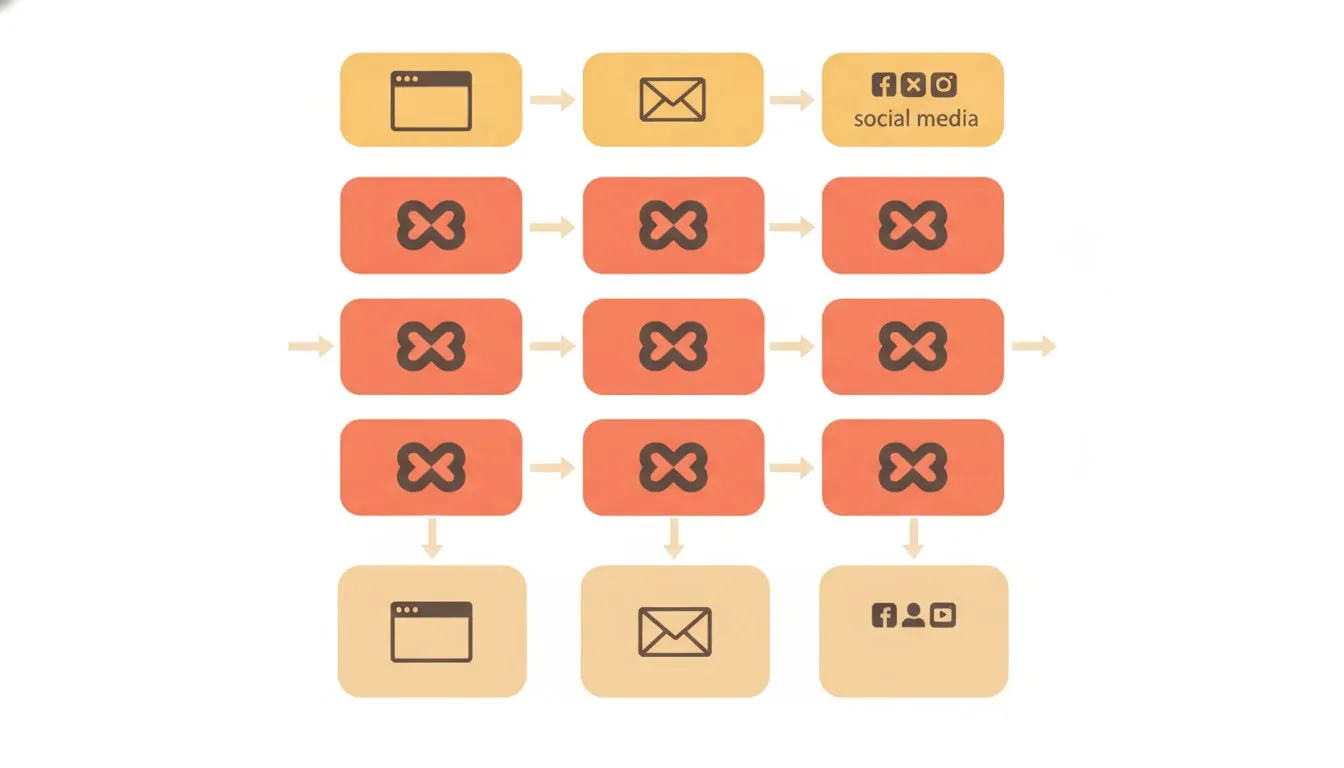
Consistency across every channel makes your brand instantly recognizable.
Practical steps to check and register your domain
You've got the theory. Now let's turn your idea into an owned, working domain. These steps move you from shortlist to registered in one sitting.
Search availability and spot alternatives fast
Start with a domain checker to see what's free right now. Have a few names ready, because your first choice may be taken.
Here's a simple process:
- List three to five name ideas you like.
- Check each one, including your preferred extension.
- Note the alternatives a checker suggests.
- Shortlist anything short, clean, and available.
Our domains guide walks you through the search and setup in more detail. If the name you want is already registered, read what to do when someone else owns the domain you want before you pay anyone anything. Found a name that’s free? Here’s how to buy a domain name without overpaying at renewal.
Check the domain's history
Some available names were used before, sometimes for spam. Before you register, look the domain up on the Wayback Machine to see what used to be there, and search Google for it to see if anything still points to it. A name with a bad past can take months to shake off.
Avoid trademark conflicts before you register
A quick trademark check now prevents legal problems later. You don't want to build a brand on a name someone else owns.
Search your name in the USPTO's Trademark Search, the free tool that replaced the old TESS database. Selling outside the US? Check WIPO's Global Brand Database too. If a name is already claimed in your industry, move on. For anything contested, talk to a professional. A five-minute check beats a costly dispute down the line.
Register your domain with your hosting from day one
Keeping your domain and hosting in one place makes life easier. One login, one renewal, one place to fix things when you need to.
With Flashcloud, yearly and 3-year plans include a free domain for life on 17 extensions, including .com, .net and .org, with free WHOIS privacy. It renews free for as long as your plan is active, so that's one less bill to track. Of fourteen other hosting companies we checked in August 2026, none included free renewal after the first year.
Once you're set up, you can point everything where it needs to go. Our guide on pointing your domain to your hosting account shows you how in a few clicks.
Whatever you're building, from a simple blog to a busy store on WooCommerce hosting, starting with a solid domain and hosting combination sets a foundation you can rely on.
A quick checklist before you buy
- Can someone type it correctly after hearing it once?
- Is it 15 characters or fewer before the dot, with no hyphens or numbers?
- Does it match your business name, with room to grow?
- Is the .com free, or is your extension one people trust?
- Are the matching social handles free?
- Is it clear of trademarks in your market?
- Is the domain's history clean?
- Do you know the renewal price, not just the first year?
Putting it all together
Now you know what makes a domain name fit your brand and grow with it. Keep it short. Keep it clear. Match it to your business, check the handles, check the renewal price, and register it somewhere you trust.
The best names feel obvious in hindsight, because they're simple, memorable, and honest about what you do. That's the standard to aim for, and the choice is yours to make.
Methodology: registration counts from Verisign's Domain Name Industry Brief, Q3 2026. Google's position on domain keywords and extensions from Google Search Central, checked November 2026. .ai figures from the Government of Anguilla, reported February 2026. The free domain renewal comparison reflects fourteen competing hosting companies checked in August 2026.
The Flashcloud team shares hosting know-how, product news, and honest guidance to help you get the most from your website.
Connect on LinkedIn